

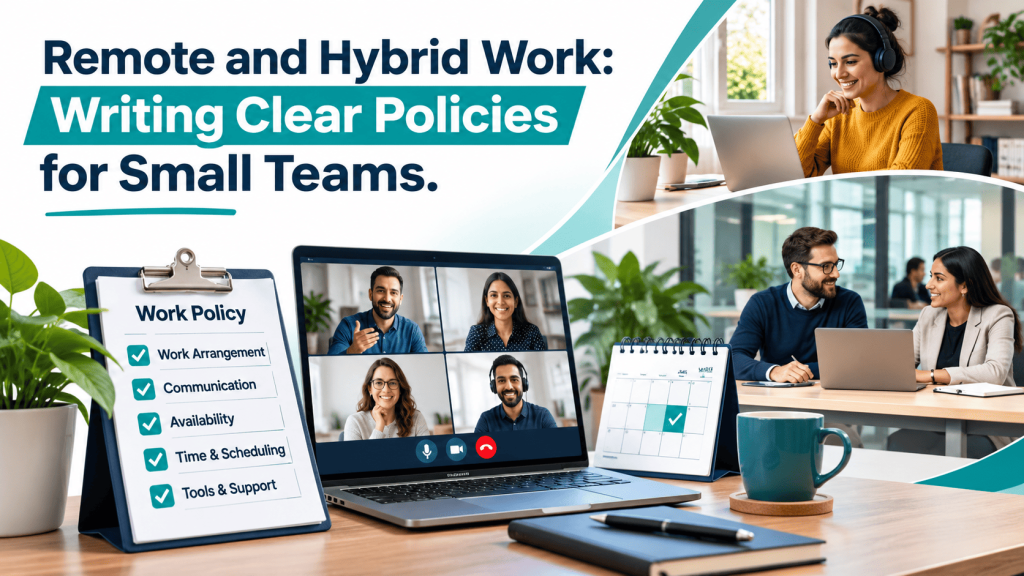
Many job seekers now ask about remote or hybrid options before they ask about anything else. Small businesses that offer some flexibility can attract candidates from a wider area and keep valued employees who might otherwise leave.
Flexibility works best when expectations are written down. Without a clear policy, remote work can create confusion about schedules, communication, and fairness across the team.
Decide Which Roles Can Be Flexible
Not every job can be done from home. Review each role and decide whether it can be fully remote, hybrid, or on-site. Explain the reasoning, such as customer-facing duties or equipment needs, so employees understand that decisions are based on the work rather than favoritism.
Set core hours when everyone should be reachable, and explain how employees request schedule changes. Clear rules prevent misunderstandings when team members work in different places.
State the job’s remote status honestly in job postings so candidates know what to expect before they apply.
Cover Tools, Security, and Pay Rules
List the tools employees will use, such as video meetings, shared drives, and chat apps, and who provides equipment. Explain security expectations like using secure Wi-Fi, locking devices, and keeping customer information private.
Remember that wage and hour laws still apply at home. Nonexempt employees must record all hours worked, including time spent answering messages after hours. Some states also require reimbursement of certain work expenses.
Employment and HR firms listed in the Employment and Recruitment category on Local Businesses Dir can help small businesses draft remote work policies that fit their state’s rules.
Keep Remote Employees Connected
Schedule regular one-on-one check-ins and occasional in-person gatherings. Measure performance by results and responsiveness rather than by how often someone appears online.
Review the policy every six to twelve months and adjust based on feedback from both managers and employees.
Conclusion
Remote and hybrid work can strengthen small teams when expectations are clear. Decide which roles can be flexible, cover tools, security, and pay rules, and keep remote employees connected. Mentioning flexible options on your website, job postings, and directories such as Local Businesses Dir helps candidates find employers that fit their lives.
Frequently Asked Questions
What should a remote work policy include?
Most policies cover eligible roles, schedules, communication expectations, equipment, security, timekeeping, and how performance is reviewed.
Do wage and hour laws apply to remote employees?
Yes. Nonexempt remote employees must be paid for all hours worked, and overtime rules still apply.
Do employers have to pay for home office expenses?
Some states require reimbursement of necessary work expenses. Check the rules in each state where employees work.
How can managers keep remote teams engaged?
Regular check-ins, clear goals, recognition, and occasional in-person meetups help remote employees feel connected.
Should job postings say whether a role is remote?
Yes. Stating remote, hybrid, or on-site status clearly helps attract candidates who are a good match.
 Keep Reading