

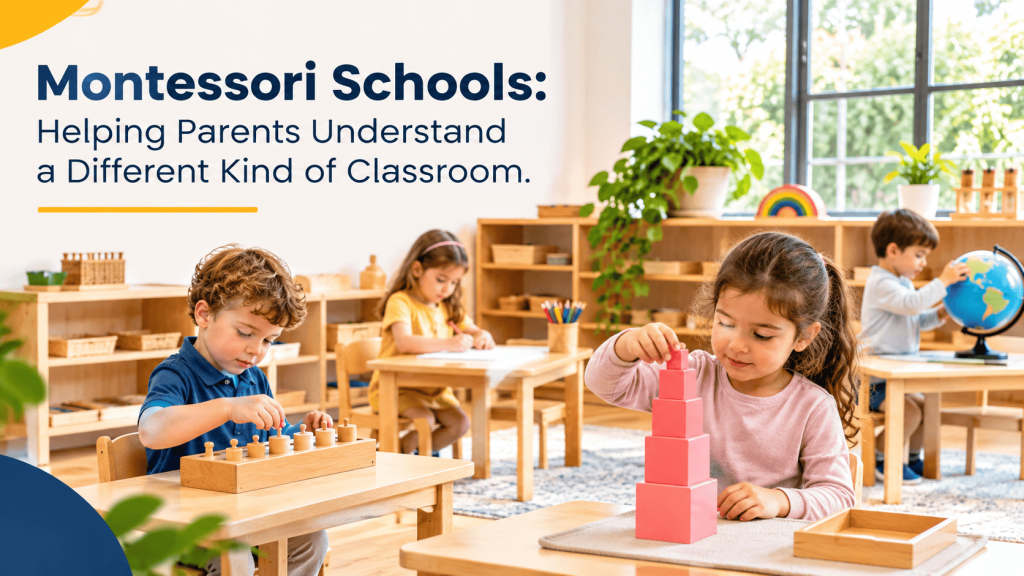
Parents touring a Montessori classroom for the first time often notice what is missing: rows of desks, a teacher lecturing at the front, and worksheets handed out to everyone at once. Instead, they see children of different ages choosing activities, working quietly on mats, and moving freely around the room.
That difference is the heart of the approach, but it can also raise questions. Schools that explain their philosophy in plain language help families decide with confidence.
Explain the Core Ideas Simply
Describe the main features of Montessori education in everyday words: mixed-age classrooms, hands-on learning materials, child-chosen work within limits, and long, uninterrupted work periods. Explain how teachers, often called guides, observe each child and introduce new lessons when the child is ready.
Avoid jargon without explanation. Terms like practical life, sensorial, or the prepared environment make sense to educators but can confuse parents. A short glossary on your website helps families follow along during tours and conversations.
Be clear that the word Montessori is not trademarked, so programs vary. Share your teachers’ training, any accreditation or affiliation, and how closely your school follows traditional Montessori practices.
Show What a Day Looks Like
Many parents wonder whether children simply play all day. Walk them through a typical schedule, including the morning work cycle, group gatherings, outdoor time, meals, and rest. Photos or short videos of real classrooms, shared with permission, make the routine easy to picture.
Explain how progress is tracked without traditional grades, such as observation notes, portfolios, and parent conferences. Families feel reassured when they understand how teachers know a child is learning to read, count, and work with others.
Schools listed in the Education and Colleges category on Local Businesses Dir can describe their age groups, schedules, and tour options in their listings, helping parents compare local programs side by side.
Make Enrollment Straightforward
Publish tuition, schedule options, application steps, and waitlist policies clearly. Explain licensing status where it applies and how parents can verify it with the state.
Offer observation visits so parents can watch a class in progress, and follow up afterward with answers to any questions that came up.
Conclusion
Montessori schools attract families who understand and value the approach. Explain the core ideas simply, show what a day looks like, and make enrollment straightforward. Accurate details on your website, Google profile, and directories such as Local Businesses Dir help parents find a school that fits their child.
Frequently Asked Questions
What is a Montessori classroom?
It is a classroom built around hands-on materials, mixed ages, and child-chosen work, with teachers guiding each child individually rather than teaching the whole group at once.
Do Montessori schools give grades?
Many do not use traditional grades in early years. Teachers usually track progress through observation, records of work, and parent conferences.
Are all Montessori schools the same?
No. The name is not trademarked, so programs vary. Ask about teacher training, accreditation, and daily practices.
What ages do Montessori schools serve?
Many serve toddlers through elementary ages, and some continue into middle school. Check which age groups each school offers.
Can I observe a Montessori class before enrolling?
Many schools offer observation visits or tours during class time. Ask the school how to schedule one.
 Keep Reading